Why Coolant Matters When Plasma Cutting Tube and Pipe
Plenty of shops plasma cut without coolant every day and get okay parts. But running coolant through the material while you cut reduces slag buildup inside the tube, cools parts faster, and cuts down on the exhaust while cutting. Coolant can be the difference between okay parts with an additional clean up step, and weld ready parts right off of the machine. Here’s how it works and when it’s worth it.
What Does Coolant Do During Plasma Cutting?
Plasma cutting uses an electrical arc to melt metal. A high-velocity gas or air stream then blows the molten material out of the cut, creating the kerf (the material removed by the cut).
On flat plate, that molten material falls into the table. Tube is different. The arc blows through the near wall and sprays molten metal onto the inside opposite wall. If that wall is hot enough, the spray fuses to it and hardens into dross or slag.
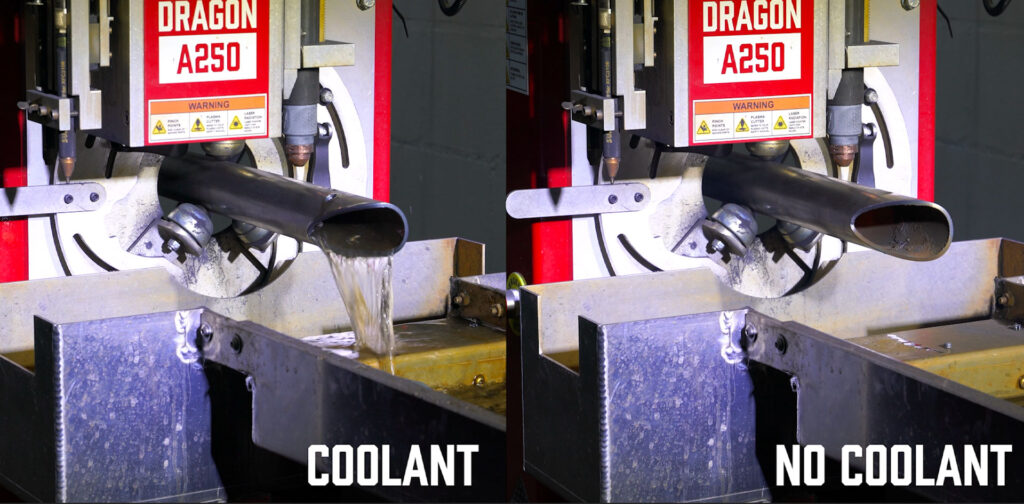
A material coolant system circulates coolant (water or water with plasma cutting additive) through the material while you cut. The moving coolant cools the inside wall, so molten spray has a harder time sticking, and it carries loose material out the end of the tube.
Material coolant is not the same as the cooling system built into some plasma torches. Torch coolant protects the torch components from overheating. Material coolant manages heat and debris inside the workpiece. They’re two separate systems with separate fluids.
3 Benefits of Using Plasma Cutting Coolant
Less Slag Inside the Tube, Less Cleanup After
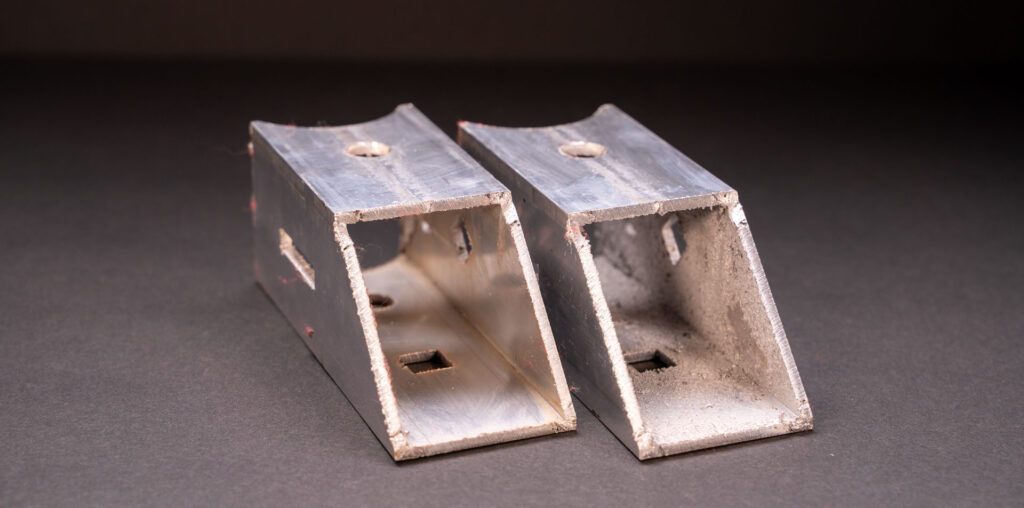
This is the biggest reason to run coolant. Without it, molten metal can collect on the inside diameter (ID) and harden into deposits around the cut. With coolant flowing through the tube, much more of that material gets flushed out during cutting instead of staying behind.
It matters most on parts with multiple holes, slots, or intersecting profiles. Every cut is another chance for slag to land inside the tube.
Keep in mind that coolant isn’t a substitute for proper cutting parameters. Torch height, amperage, cut speed, gas selection, and consumable condition still drive cut quality. Coolant improves a well-tuned process. It won’t fix a poorly set-up one.
Better Heat Management
Plasma puts concentrated heat into a small area, and it builds up quickly when you’re cutting multiple features into one tube. Circulating coolant pulls that heat out of the material much faster than air does.
The faster a part gives up heat, the sooner it can be handled for the next operation. In a production run, that means less time with finished parts sitting around because they’re too hot to touch.
Still, follow your shop’s hot-work handling procedures. Coolant doesn’t make a freshly cut part automatically safe to grab.
Less Smoke and Fume Buildup
Plasma cutting produces smoke as the arc melts and vaporizes metal. Coolant flowing through the tube captures some of the hot particulate and reduces how much smoke escapes from the open end. That makes a difference when you’re cutting part after part.
Coolant isn’t a replacement for ventilation or fume extraction, though. Keep using the exposure controls recommended for your material and process.
When Coolant Makes the Biggest Difference
Coolant pays off most in a few situations:
- Aluminum tube. Aluminum holds heat, and molten aluminum sticks hard to the ID. For all Aluminum material regardless of material size, coolant is strongly recommended.
- Small OD tube. The opposite wall is close to the cut, so molten spray has less distance to cool before it hits, regardless of the material type.
- Parts with lots of features. More holes and slots mean more slag inside the tube.
You can often skip it on heavier-wall mild steel, simple end cuts, and low-volume jobs where a little cleanup isn’t a big deal.
One tradeoff to plan for: parts come off wet. Let them dry or blow them off before welding, since water in the joint can cause porosity.
How Does a Tube and Pipe Coolant System Work?
A material coolant system uses a pump, reservoir, and hoses to circulate a mixture of plasma cutting fluid and water through the tube or pipe during cutting. A plug at the chuck end seals the material so coolant flows in one direction, through the tube and out the other end.
The system runs as a closed loop. Coolant flows through the material, gets caught, and returns to the reservoir to be used again. You don’t need a constant supply of fresh water, just a circulating supply that you monitor and top off as needed.
Can You Use Regular Water?
Yes. Bend-Tech material coolant systems can run on water alone. Plain water on mild steel can lead to rust, though, so many shops add a plasma rust inhibitor such as Sterling Cool or Green Cut. Use the product and concentration the manufacturer recommends.
Don’t assume every coolant is interchangeable. Material coolant and torch coolant have different requirements, so always use fluids approved for the specific system.
Bend-Tech Coolant System Options
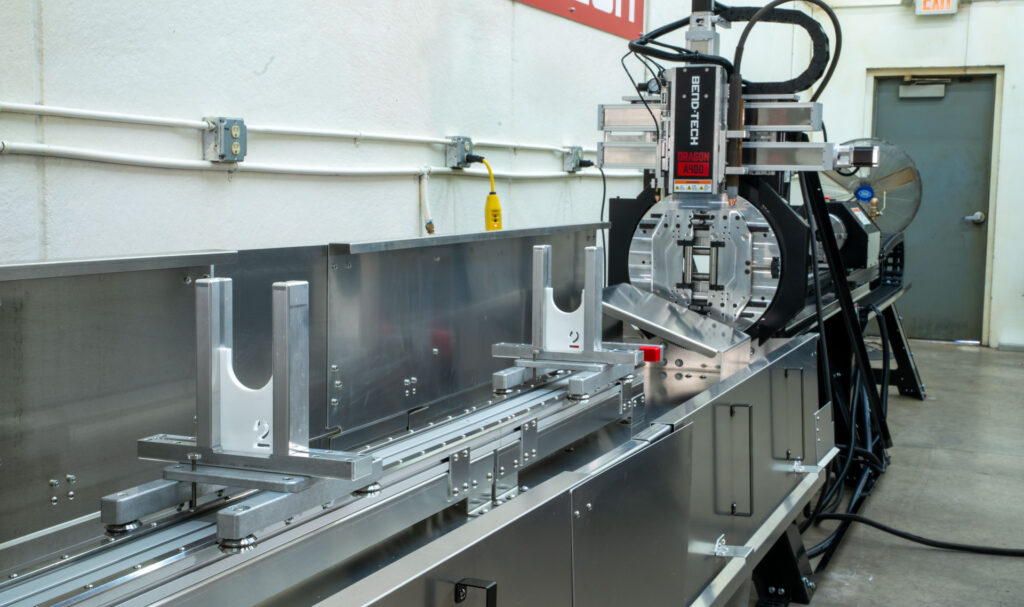
Material Coolant System: Coolant is stored in a 10-gallon reservoir and runs through dedicated hoses in the cable track. For material under 2″ OD, a universal plug seals the tube end with a bit of back pressure when the material is tightened in the chuck. For material over 2″ OD, a custom-sized plug is inserted into the tube end and tightened so it expands and seals. Coolant exiting the tube is caught by trays at the front of the machine and recirculated.
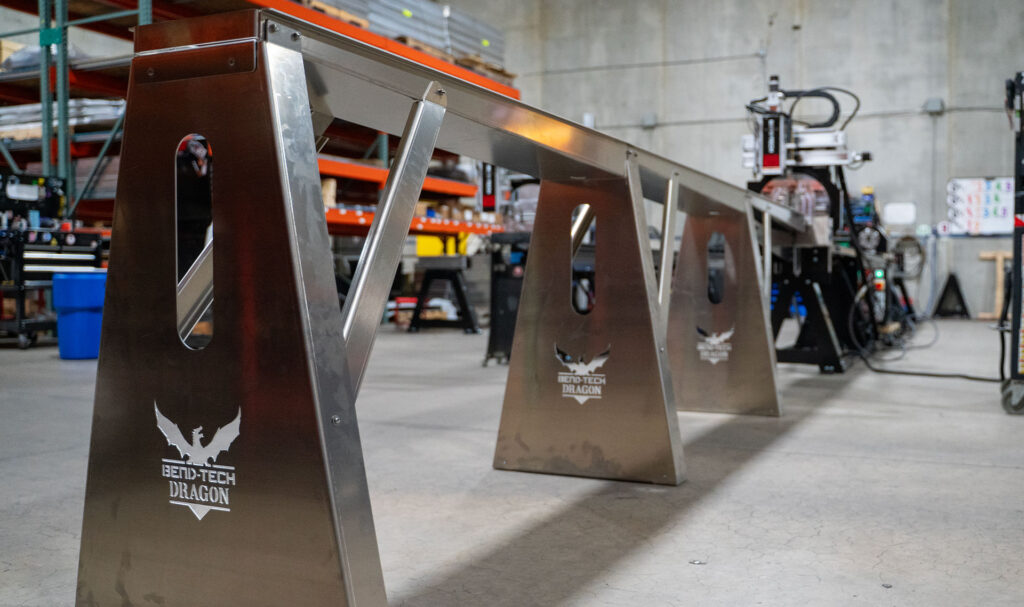
Coolant Support System: A heavier-duty option that supports long, heavy parts as they exit the front of the machine. This reduces sagging and keeps cutting tolerances tight. The coolant works the same way as the Material Coolant System.
Both systems work on the Dragon A400 and A250, so the choice comes down to the parts you cut. If your parts are long, heavy, or both, the Coolant Support System is the better fit. Talk to a Bend-Tech sales specialist for help choosing the right option.
Frequently Asked Questions
Do you need coolant to plasma cut tube and pipe?
No. Coolant reduces slag inside the tube, cools parts faster, and cuts down on smoke, so it’s most valuable for aluminum, small OD tube, and parts with many cut features.
Can you use just water in a plasma cutting coolant system?
Yes. Plain water works for carrying slag out of the tube and pulling heat from the part. Many shops add a plasma rust inhibitor to prevent rust on mild steel parts and equipment.
Do you need coolant to plasma cut aluminum tube?
It’s strongly recommended. Aluminum holds heat, and molten aluminum sticks hard to the inside wall. Running coolant through the tube leaves cleaner parts with less cleanup.
Is plasma cutting coolant the same as torch coolant?
No. Material coolant runs through the tube you’re cutting, while torch coolant circulates inside a liquid-cooled torch to protect its components. They have different requirements, so keep the fluids separate.